Subject to change.

Subject to change.
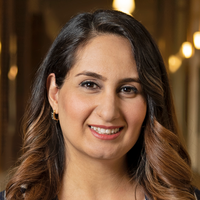
Nasim Yahyasoltani received Ph.D. degree in electrical engineering from the University of Minnesota, Twin Cities, in June 2014. Since August 2019, she has been a Northwestern Mutual Assistant Professor with the Department of Computer Science, Marquette University. Her research interests include statistical signal processing, machine learning/AI, and optimization theory with applications to big data analytics, healthcare, and smart grid.
Vision language models (VLMs) in computational pathology have shown promise for cancer diagnosis, but their performance remains limited by an information bottleneck in the language modality, restricting their ability to capture the complex, multi-step reasoning required for reliable clinical decision-making. This limitation reduces their effectiveness in real-world diagnostic settings where interpretability and rich semantic understanding are critical. In this work, a multi-expert reasoning-informed vision language multi-instance learning framework is proposed for cancer subtyping. Multimodal large language models (MLLMs) are prompted using both textual inputs and whole slide image thumbnails to generate detailed semantic descriptions of cancer subtypes. A multi-expert prompting strategy is introduced, incorporating complementary perspectives from pathologists, tissue-level experts, and cellular-level experts to inject diverse domain knowledge. In addition to the final generated responses, intermediate chain-of-thought reasoning outputs are leveraged to construct enriched language representations that guide visual features within a shared embedding space, improving cross-modal alignment. Experiments conducted on the TCGA-LUNG dataset under a few-shot learning setting demonstrate that the proposed framework produces semantically enriched embeddings that significantly improve cancer subtyping performance compared to conventional language-guided approaches. The integration of multi-expert prompts and reasoning signals enhances both feature representation quality and robustness across different multimodal large language models. Overall, incorporating structured expert knowledge and reasoning processes into VLMs improves their ability to capture complex pathological patterns. This approach mitigates the language bottleneck and advances the development of more accurate, interpretable, and clinically applicable artificial intelligence systems for computational pathology.
Learning Objectives:


© 2026 DIGITAL PATHOLOGY ASSOCIATION
ALL RIGHTS RESERVED
DISCLAIMER | SITEMAP | CONTACT US | PRIVACY POLICY
