Subject to change.

Subject to change.
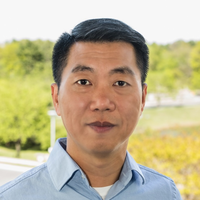
Cheng Cui, Senior Translational Regulatory Affairs Director, brings more than ten years of FDA and industry experience, focusing on digital and computational pathology, biomarkers, companion diagnostics and digital health. At the FDA, he served as lead reviewer for digital and computational pathology devices. At AstraZeneca, he leads translational regulatory strategy for AI-enabled computational pathology and developing biomarkers to accelerate precision medicine in oncology.
Computational pathology is redefining cancer therapeutic target assessment, delivering clinical accuracy and reproducibility that far exceeds traditional visual scoring. For the past 7+ years, AstraZeneca has developed Quantitative Continuous Scoring (QCS), a computational pathology platform built using supervised AI/Machine Learning with expert pathologist-annotated whole slide images (WSI) as benchmarked ground truth. QCS automatically detects and segments tumor regions, tumor cells, and their subcellular compartments to quantify immunohistochemical (IHC) staining intensity on each individual tumor cell—unlocking biological insights such as target internalization and expression heterogeneity critical for predicting response to antibody-drug conjugates (ADCs). This year's workshop moves beyond QCS algorithm and biomarker development and into the real world. Attendees will hear how QCS has been implemented in practice, featuring TROP2 Normalized Membrane Ratio (NMR) as a use case of end-to-end deployment, challenges that matter most to pathologists and laboratory leaders: analytical variability through AZ's Analytical Verification Program studies, the evolving regulatory landscape for AI-based companion diagnostics, and a forward-looking vision for QCS technology. Whether you are evaluating computational pathology solutions for your institution or seeking to understand how AI-developed biomarkers will shape companion diagnostic development, this session is for you.
Learning Objectives:
This DPA R&STF special session convenes FDA and industry leaders to advance digital pathology regulatory science and consensus standards. The session opens with a review of R&STF’s annual achievements by Chair Dr. John Groth (Endeavor Health), followed by a presentation from Dr. Aldo Badano (FDA) on the FDA/DPA collaboration exploring scientific approaches for technical performance assessment. A multidisciplinary panel, moderated by Cheng Cui (AstraZeneca), will then explore three key themes: evaluation approaches for WSI systems, the establishment of robust validation methods for computational pathology-based devices, and strategies for AI-enabled biomarker and companion diagnostic validation to align with current FDA considerations for data strategy and clinical validation in premarket applications.


© 2026 DIGITAL PATHOLOGY ASSOCIATION
ALL RIGHTS RESERVED
DISCLAIMER | SITEMAP | CONTACT US | PRIVACY POLICY
