Subject to change.

Subject to change.
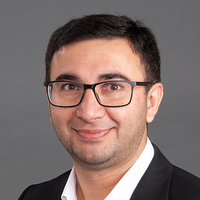
Dr. Khalid Niazi is an Associate Professor at The Ohio State University, where he directs the AI4Path Lab. Operating at the intersection of artificial intelligence, pathology, and oncology, his research focuses on developing multimodal AI frameworks and computational models to enhance clinical decision support. Deeply committed to translational science, he collaborates with clinical teams and mentors the next generation of researchers to advance patient care.
PDAC remains one of the deadliest malignancies, driven by limited therapeutic options and lack of widely implemented, clinically actionable biomarkers. Transcriptomic subtyping using the Moffitt classification (classical, basal-like, intermediate classical, and intermediate basal-like) provides predictive value for treatment selection, including differential response to FOLFIRINOX (FFX) and gemcitabine. However, routine RNA-based subtyping remains limited by cost, turnaround time, and restricted accessibility, particularly in resource-limited settings. We developed an interpretable, multi-scale AI model to infer PDAC molecular subtypes directly from H&E WSIs and assess treatment response.A total of 208 PDAC patients from TCGA were included. Bulk RNA-seq data were used to generate ground-truth labels based on Moffitt subtypes. Corresponding H&E WSIs were used to train the AI model to predict 4-class molecular subtypes. Model performance was evaluated using 5-fold cross-validation (CV). We further assessed clinical utility by predicting objective response rate (ORR) to gemcitabine or FFX using 20-fold Monte Carlo CV.The AI model achieved strong performance for 4-class subtype prediction with an AUC of 0.93, accuracy of 0.88, sensitivity of 0.84, and specificity of 0.91. Our trained model also demonstrated clinical relevance for treatment response prediction, achieving an AUC of 0.85, accuracy of 0.83, sensitivity of 0.80, and specificity of 0.86 for ORR.This study demonstrates the feasibility of predicting clinically relevant PDAC molecular subtypes directly from H&E slides. By complementing the current RNA-based assays, this approach enables rapid, scalable, and cost-effective molecular stratification, improving accessibility in global and resource-limited healthcare settings. Ongoing work includes predicting disease control rate and overall survival, along with external multi-institutional validation to assess generalizability and clinical utility.
Learning Objectives:


© 2026 DIGITAL PATHOLOGY ASSOCIATION
ALL RIGHTS RESERVED
DISCLAIMER | SITEMAP | CONTACT US | PRIVACY POLICY
