Subject to change.

Subject to change.
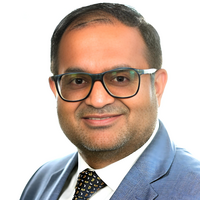
Ehsan Ullah is a clinician-scientist. He works for Division of Surgery at Counties Manukau, Health New Zealand and has an adjunct Assistant Professor position at Department of Pathology, The Ohio State University. He is also a member of DPA's Board of Directors and (ISO)'s technical committee on the medical laboratory standards. Ehsan's research interests include use of computational intelligence to complement and augment human effort across multiple sectors including diagnostic pathology.
Whole-slide imaging (WSI) has transformed glass slides into gigapixel datasets containing billions of data points per case. Yet routine practice and most artificial intelligence (AI) applications still extract only a fraction of the biologically and clinically meaningful information embedded within these images. This presentation introduces the concept of the 'pixelome' i.e., the total complement of diagnostic, prognostic, predictive, and mechanistic insights encoded in WSI pixels, and proposes 'pixelomics' as its systematic, omics-style interrogation. Drawing on the historical evolution of genomics, proteomics, and systems biology, pixelomics reframes digital pathology from task-specific image analysis toward a comprehensive, image-centric omics discipline. We will outline the technological foundations enabling this shift, including advances in whole-slide infrastructure, quality control, harmonization strategies, and scalable computational pipelines. Emphasis will be placed on transformer-based architectures, self-supervised learning, and large pathology-specific foundation models that generate reusable, generalizable representations across organs, diseases, and clinical contexts. Beyond representation learning, the session will explore how pixelomic features integrate with genomics, spatial transcriptomics, radiomics, and clinical metadata to create a spatially grounded multi-omics framework for precision pathology. Emerging multimodal and generative AI approaches further expands this paradigm by linking image, text, and molecular data within unified models. Finally, we will discuss key challenges including standardization, interpretability, governance, and deployment readiness, and outline a roadmap for translating pixelomics from research environments into routine diagnostic workflows. By repositioning computational pathology within an omics framework, pixelomics establishes digital pathology as a central, integrative engine of precision medicine.
Learning Objectives:


© 2026 DIGITAL PATHOLOGY ASSOCIATION
ALL RIGHTS RESERVED
DISCLAIMER | SITEMAP | CONTACT US | PRIVACY POLICY
