




Digital pathology continues to accelerate—faster scanners, larger datasets, and increasingly sophisticated algorithms. Innovation is everywhere. But beneath the momentum, the foundation of digital pathology remains unchanged.
It still rests on two enduring pillars that long predate digitization: proficiency and quality.
Digital systems do not replace these principles.They expose them.

In traditional microscopy, individual variability could remain partially hidden. Differences in preparation, staining, sectioning, or review were often absorbed into the routine of daily practice. Digital pathology removes that insulation. As workflows become standardized and images are shared broadly, performance becomes visible—across teams, across institutions, and across time.
Strengths surface. So do weaknesses.
This is not a flaw of digital pathology. It is one of its greatest strengths.
Proficiency in digital pathology is not defined by how quickly new tools are adopted, but by how reliably foundational skills translate into a digital environment. Slide preparation, tissue handling, fixation, staining consistency, and scanning discipline matter more than ever. A high-resolution scanner does not correct poor upstream practice—it records it faithfully.
Digital pathology introduces a new level of accountability.
When performance becomes visible, excellence becomes reproducible. Inconsistency becomes actionable. Quality is no longer assumed; it is demonstrated.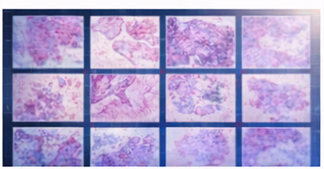
Quality follows the same rule. Digital platforms amplify both rigor and variation. When quality systems are strong, digital workflows enhance confidence, collaboration, and reproducibility. When they are weak, technology does not soften the impact—it clarifies it.
That clarity can feel uncomfortable. It challenges assumptions and forces long-standing processes into sharper focus. But discomfort is not failure. More often, it is the beginning of real improvement.
Digital pathology also redefines responsibility. Success is no longer confined to individual expertise at the microscope. It depends on coordinated performance across histology, scanning operations, informatics, validation, and clinical interpretation. Each link in the chain matters—and each is now observable.
As artificial intelligence and advanced analytics become more deeply integrated into pathology workflows, this reality becomes unavoidable. Algorithms depend on data quality. Validation depends on consistency. Trust depends on transparency. None of these can exist without disciplined fundamentals.
Digital pathology does not eliminate judgment—it demands better judgment. It does not reduce the need for experience—it exposes where experience matters most. Technology becomes a mirror, reflecting the state of our practice with unprecedented clarity.
For teams willing to engage honestly, that clarity is empowering. It creates the opportunity to strengthen fundamentals, reinforce best practices, and build systems that are not only more advanced—but more reliable, more transparent, and more trustworthy.
Digital pathology is not about replacing what came before. It is about revealing what was already there—and deciding what we are willing to do with that truth.
Key Takeaways
- Digital pathology reveals proficiency and quality rather than replacing them
- Foundational practices matter more—not less—in a digital environment
- Visibility drives accountability, consistency, and trust
- Discomfort can be a catalyst for improvement
- Sustainable innovation depends on disciplined fundamentals
Author

Michael D. Henderson
Digital Pathology Supervisor
Laboratory Supervisor
Innovation Lead & Implementation Liaison
Autopsy Instructor
Founder, Digital Pathology Autopsy Streaming (DPAS)
Endeavor Health – Evanston Hospital


Please log in to your DPA profile to submit comments