Subject to change.

Subject to change.
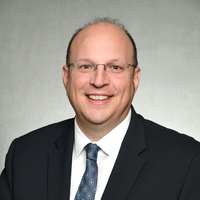
Dr. Miller is a Professor of Pathology at the University of Utah School of Medicine and practices in a private group at the Intermountain Medical Center in Salt Lake City where he directs their IHC lab. From 2020-2025 he led the first enterprise-wide digital pathology implementation. Dr. Miller is a highly published author and has co-edited 2 pathology textbooks through a total of 5 editions. Aside from his interest in immunohistochemistry and digital pathology, his expertise includes cardiovascular, autopsy, and transplant pathology. Dr. Miller is also president of the Utah Society for Pathology and currently serves as Chair of the College of American Pathologists’ Immunohistochemistry Resource Committee and a member of CAP’s Council on Scientific Affairs.
Tumor biology doesn't care about our scoring bins. It is inherently continuous and highly complex—yet our standard companion diagnostics still force pathologists to reduce rich, predictive data into simplistic, visual estimations. When patient outcomes hang in the balance, can we really afford high interobserver variability? In this panel style workshop, we will explore how advanced computational algorithms are moving diagnostics beyond visual estimation by delivering highly reproducible, cell-level quantitative signals. More importantly, we will bridge the gap between scientific promise and laboratory reality. Our panel includes digital pathology pioneers, AI developers, and regulatory leaders who will give you the practical playbook on what it takes to actually deploy these advanced tools. We will discuss how computational CDx devices on the horizon will fundamentally alter the way we practice medicine and how pathology is at the very forefront of this revolution.
Learning Objectives:
Traditional manual scoring of immunohistochemistry (IHC) faces limitations in evaluating novel biomarkers for precision oncology. Conventional companion diagnostics rely on subjective, ordinal scoring systems (e.g., 0, 1+, 2+, 3) which may limit their ability to capture more complex biological mechanisms. Conversely, computational pathology AI tools capture objective, quantitative measurements, many that cannot be achieved by eye alone. Because computational pathology scores cannot be predicted manually, transitioning from ordinal frameworks to automated, continuous mathematical models is a difficult paradigm shift for pathologists to trust. To establish the analytical evidence required to build trust, a Roche-sponsored study evaluated the reproducibility of the TROP2 (EPR20043) NSCLC RUO algorithm across 12 real-world laboratories in eight countries. To evaluate the pathologist workflow, centrally stained slides were provided to determine concordance of digital results, and unstained slides were provided to assess full device concordance. The former achieved an overall inter-site agreement of 100% and the latter workflow achieved an overall inter-site agreement rate of 94.1%, which increased to 99.8% when excluding borderline cases near the established threshold. The workshop will conclude with an interactive Q&A forum to discuss how the results may impact the future of AI-driven precision oncology.
Learning Objectives:


© 2026 DIGITAL PATHOLOGY ASSOCIATION
ALL RIGHTS RESERVED
DISCLAIMER | SITEMAP | CONTACT US | PRIVACY POLICY
