Subject to change.

Subject to change.
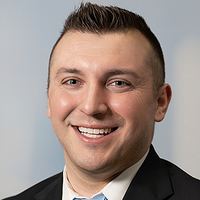
Dr. Nick Spies is a clinical pathologist and medical director of the Applied AI group in the Institute for Research and Innovation at ARUP laboratories, with a clinical role overseeing tumor marker testing in Clinical Chemistry. His prior roles as a software engineer, OBGYN resident, start-up founder, and AI consultant have cultivated his passion for data analytics and quality improvement. He leads a research program focused on how we can use computational tools to improve laboratory quality.
Hosted on behalf of the Association for Pathology Informatics (API), this interactive session demonstrates how emerging Generative AI techniques are transforming raw pathology data into actionable research and business intelligence systems. Pathology laboratories generate immense volumes of narrative text, yet extracting structured data elements and meaningful insights from unstructured narrative reports remains a key bottleneck in research and clinical operations endeavors. The first half of this session examines how Large Language Models (LLMs) can be leveraged to accurately, reliably, and efficiently parse unstructured pathology reports, transforming complex clinical descriptions into standardized, structured data elements without sacrificing accuracy or workflow speed. Building on this foundation, the second presentation explores the next evolution of AI integration: agentic AI systems. Attendees will learn how giving agentic AI tools safe, policy-compliant access to enterprise data warehouses enables dynamic querying, automates complex reporting, and unlocks deeper analytic efficiency across healthcare systems. Together, these presentation topics bridge the gap between unstructured clinical text and advanced enterprise analytics, providing attendees with practical strategies to implement generative and agentic AI tools safely within their own pathology informatics architecture.
Learning Objectives:


© 2026 DIGITAL PATHOLOGY ASSOCIATION
ALL RIGHTS RESERVED
DISCLAIMER | SITEMAP | CONTACT US | PRIVACY POLICY
